


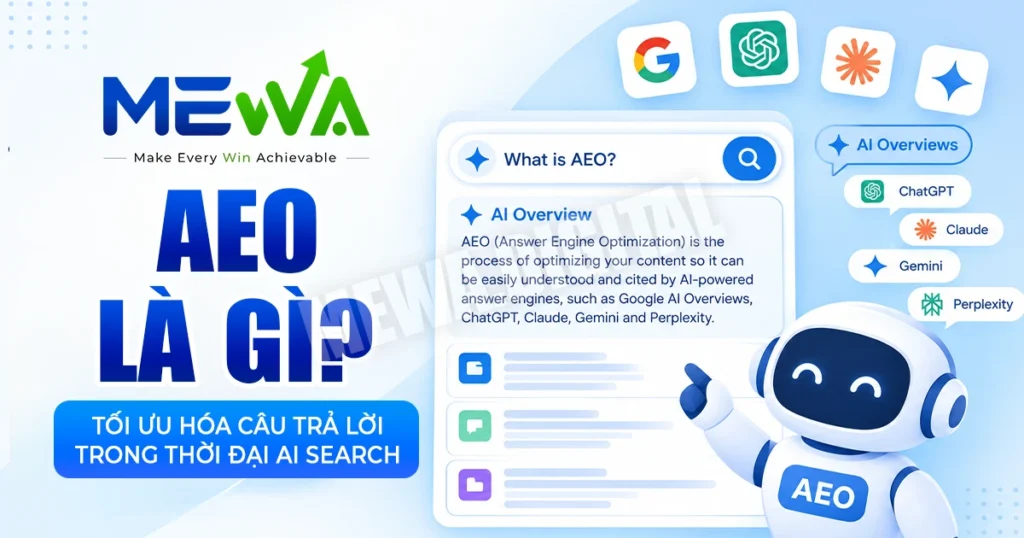
The rise of generative AI tools is completely changing how people search for information. Instead of clicking through a wall of blue links and skimming articles to piece together an answer, modern users want immediate, accurate answers. This shift has given rise to AEO – a vital discipline in modern search strategy.
So, what is AEO, and how can you leverage it for your website? Let MEWA guide you through everything you need to know.
What is AEO? Defining Answer Engine Optimization
Answer Engine Optimization (AEO) is the practice of optimizing web content so that artificial intelligence systems, voice assistants, and search engines select it as the definitive answer to a user’s query.
How AEO works behind the scenes
AI engines process and pull answers through three primary phases:
- Contextual Analysis: When a user asks a question, the engine uses Natural Language Processing (NLP) to parse the intent behind the query rather than matching isolated keywords.
- Authority Filtering: Algorithms scan the web for well-structured, fact-backed content from authoritative websites that meet strict E-E-A-T (Experience, Expertise, Authoritativeness, Trustworthiness) criteria.
- Extraction & Synthesis: The engine extracts concise paragraphs, bullet points, or tables and synthesizes them into a single response, featuring source citation links.
Example of AEO
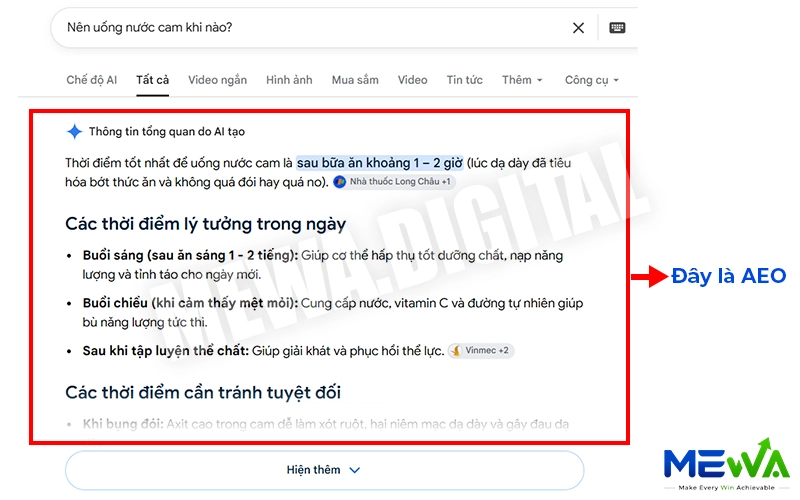
To understand how AEO operates in practice, consider the following query:
User Search Query: “When is the best time to drink orange juice?”
→ Traditional Search Approach (SEO): Google returns a list of 10 links. The user must click on a site and skim through long paragraphs to locate the answer.
→ AEO-Optimized Approach: An AI engine (e.g., Google AI Overviews) scans the web and delivers a direct response at the very top of the page:
The best time to drink orange juice is roughly 1 to 2 hours after a meal, when your stomach has partially digested food and is neither completely full nor empty. (Source Citation: YourWebsite.com)
The Result: Your site earns the primary citation slot because your article provided an upfront, structured answer that directly satisfied the search intent.
AEO vs SEO vs GEO: What’s the difference?
Building an effective search strategy requires understanding how AEO fits alongside traditional search and new AI frameworks.
AEO vs SEO
The core difference between AEO vs SEO lies in the final deliverable and user destination:
- SEO (Search Engine Optimization): Focuses on ranking a webpage on Search Engine Results Pages (SERPs) to drive organic click-through traffic to the website.
- AEO (Answer Engine Optimization): Focuses on delivering direct, authoritative answers to specific questions, aiming to become the primary cited source in zero-click and AI search interfaces.
AEO vs GEO
Comparing AEO vs GEO is a matter of broad strategy versus specialized execution.
AEO (Answer Engine Optimization)
The overarching umbrella. It covers optimizations for all answer-driven systems, including Featured Snippets, voice assistants (Siri, Alexa), and conversational search engine features.
GEO (Generative Engine Optimization)
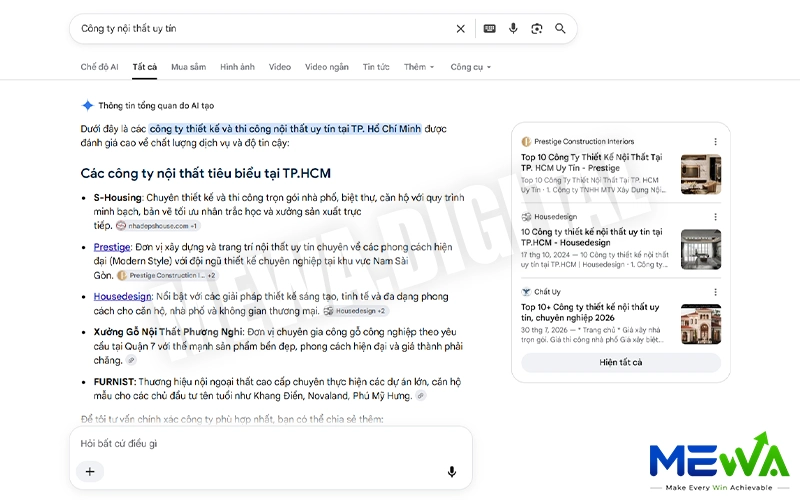
A specialized sub-discipline within AEO tailored specifically for Large Language Model (LLM) engines like ChatGPT, Perplexity, and Google AI Overviews. GEO focuses on providing rich data synthesis so AI systems can easily ingest and reference your content during complex generations.
Comparison matrix: SEO vs AEO vs GEO
| Feature | SEO | AEO | GEO |
| Core Focus | Optimizing for search engines and link listings. | Optimizing content to serve direct answers across all answer platforms. | Optimizing content specifically for generative AI models (LLMs). |
| Target Output | Page 1 rankings; organic website clicks. | Featured snippets, direct answer boxes, voice responses. | In-text citations and source attribution within AI syntheses. |
| User Behavior | Types keywords → clicks a website link. | Asks a question → receives an immediate answer. | Enters complex prompts → reads an AI-synthesized overview. |
| Key Factors | Keywords, backlinks, technical site health. | Direct answers, FAQ schemas, entity mapping. | E-E-A-T, real-time data, expert quotes, clear data structures. |
Key benefits of optimizing for AEO
Implementing an AEO strategy offers distinct competitive advantages that help your brand adapt to evolving search behaviors.
Capture prime real estate on the SERP
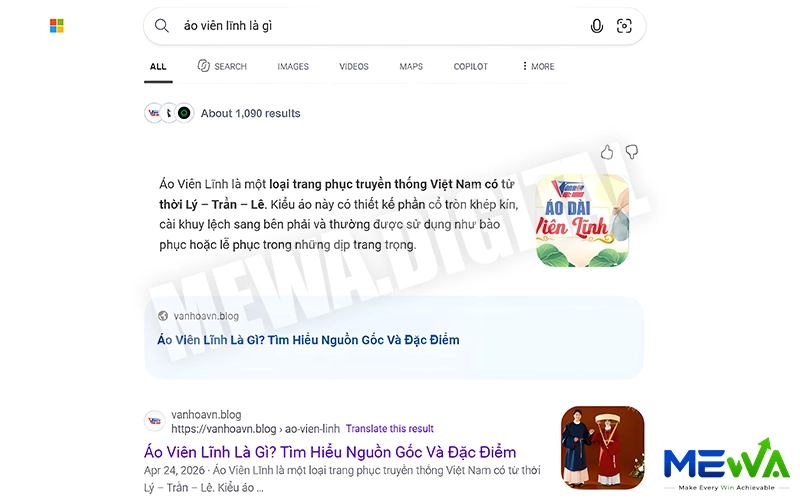
Optimizing for AEO helps your content claim top-tier search placements like Featured Snippets (Position Zero) and AI Overviews. These high-visibility spots dominate screen real estate, capturing user attention instantly before they even scroll down.
Establish brand authority and trust
To be cited as an official answer source by AI engines, your website must pass strict trust filters. Consistently appearing as the primary source behind AI responses solidly positions your business as an industry expert in the eyes of your audience.
Drive high-intent traffic with superior conversion rates
AEO allows you to capture users using voice search and virtual assistants – people who usually have urgent, specific needs. When these users click through AI citations for deeper insights, they bring higher intent and convert far better than generic search traffic.
AEO checklist: 6 steps to optimize content for AI search
Here is a step-by-step AEO checklist designed to help your content satisfy traditional SEO requirements while maximizing its chances of being extracted and cited by AI engines.
- Step 1: Research question-based keywords and search intent
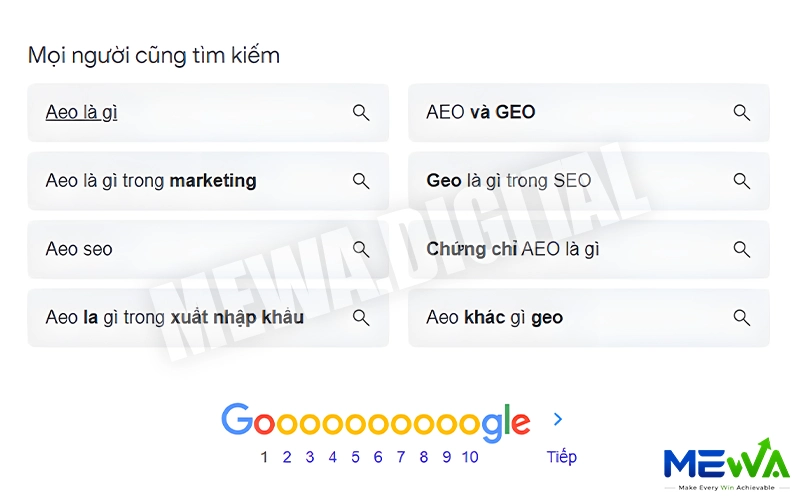
The first phase of your AEO checklist is identifying the exact questions your target audience is asking:
– Focus on interrogative queries: Target question phrases starting with What, How, Why, Where, When, and Who.
– Mine real-world search data: Uncover high-intent questions from Google’s “People Also Ask” (PAA) boxes, Perplexity prompts, and common customer inquiry logs. - Step 2: Implement a direct Q&A content structure
Once you have your target questions, format your content so search algorithms can effortlessly spot the answers:
– Use questions in headings: Turn exact user queries into clear H2 or H3 tags.
– Apply the 2-sentence rule (Direct Answer): Write a concise, direct answer (roughly 40–50 words) immediately beneath the heading before diving into deeper explanations. - Step 3: Format content for optimal scannability
AI models excel at extracting information from neatly organized formats:
– Bullet points: Ideal for listing features, pros and cons, or unordered key takeaways.
– Numbered lists: Best for step-by-step workflows and tutorials.
– Tables: Perfect for presenting technical specs, feature comparisons, or structured data. - Step 4: Deploy structured data markup
A critical technical step in the AEO checklist is implementing schema markup so AI web crawlers accurately grasp your page’s context:
– FAQPage schema: Use this for dedicated FAQ sections.
– HowTo schema: Ideal for step-by-step technical guides and tutorials.
– Article & Author schema: Clearly define who wrote the content and highlight the core topic of the article. - Step 5: Reinforce trust and E-E-A-T signals
AI algorithms heavily favor content from reputable, transparent sources with verifiable claims. Always back up your claims with real-world data and cite authoritative, primary industry reports.
- Step 6: Optimize technical access for AI bots
The final step in completing the AEO checklist is ensuring AI engines can access and parse your site seamlessly. Start by reviewing your robots.txt file to verify you aren’t accidentally blocking major AI crawlers from indexing your pages.
Additionally, optimizing page speed and maintaining strong Core Web Vitals metrics will help AI systems crawl, analyze, and extract content from your website in real time.
Summary
Answer Engine Optimization (AEO) is essential for maintaining search visibility as user behaviors shift toward AI-assisted research. By delivering immediate answers, structuring information cleanly, and enforcing strict E-E-A-T standards, you can position your content to be the primary answer source across modern AI search engines.
